
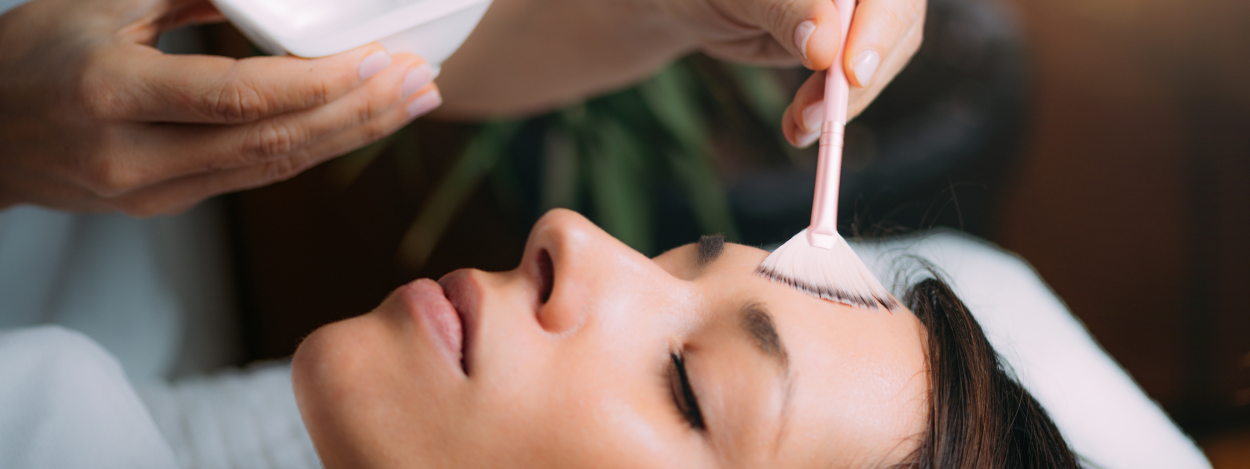
People often ask if an advanced facial peel is really different from the exfoliating products they already use at home. The answer is yes, but not because one is automatically good and the other is automatically weak. They are built for different jobs. A home exfoliant usually supports maintenance. A professional peel is chosen when the skin needs a more intentional reset, a more targeted resurfacing plan, or more help with concerns that are not moving with regular home care.
That difference matters because many people try to solve a stubborn skin concern by adding stronger and stronger products at home. They increase acid frequency, layer exfoliating pads with cleansers and serums, or switch from 1 scrub to another and hope something finally changes. Sometimes they get a little brightness at first. Then the skin plateaus. In other cases, it turns dry, irritated, reactive, or harder to treat well.
At Clear Skin Medi Spa, we do not position a chemical peel as something everyone needs. We recommend it when the concern and the skin condition actually call for it. If your skin is looking dull and a mild home exfoliant is enough to keep it smooth, that may be all you need. If you are dealing with post-breakout marks, uneven tone, texture that is not shifting, or a tired-looking surface that keeps coming back no matter what you try at home, a professional peel may make more sense.
This guide is here to help you tell the difference. We will walk through what home exfoliation can do well, where it tends to stop helping, what a professional peel changes, what recovery can look like, how peels compare with other resurfacing options, and how to know when your skin may need a clinic treatment instead of another product from the shelf.
Home exfoliation and professional peels are not trying to do the same job
The easiest way to compare them is to stop thinking of them as different strengths of the same thing. Home exfoliation is usually part of an ongoing routine. A professional peel is a treatment decision.
At home, exfoliation is often used to:
- reduce surface dullness
- help makeup sit more smoothly
- keep flaky buildup under control
- support a brighter-looking finish
- maintain results from other treatments
That is useful, and for many people, it is enough. A good home routine can help the skin look fresher and feel smoother when the concern is mild.
A professional peel is different because it is selected around the concern, the skin condition, your tolerance, your history, and your schedule. Mayo Clinic explains that chemical peels are used to improve the appearance of the skin by removing the top layers in a controlled way. Cleveland Clinic also notes that a peel can be used to improve texture, fine lines, discoloration, and certain acne-related concerns. The American Academy of Dermatology says peels can help with acne, fine lines, dark marks, and uneven skin tone when chosen and applied appropriately.
So the comparison is not really:
- weak exfoliation versus strong exfoliation
It is more like:
- maintenance versus treatment
- general routine support versus targeted resurfacing
- self-directed use versus a plan chosen in clinic
Once you look at it that way, the decision becomes easier. The question is not which one sounds more powerful. The real question is which one matches what your skin is asking for right now.
What at-home exfoliation can do well
Home exfoliation has a real place in skin care. It is not a waste of time, and it is not something you need to abandon the moment you start thinking about clinic treatments. For the right person, a home exfoliant can keep the skin looking cleaner, smoother, and brighter between appointments.
It tends to help most when:
- the concern is mild dullness
- the skin is already fairly stable
- you want upkeep instead of correction
- the goal is smoother product and makeup application
- the routine is well-spaced and not irritating the skin
That last point matters a lot. A home product can be useful when it is used with restraint. It often becomes a problem when it turns into the answer to every skin complaint.
People often start with a cleanser, toner, serum, or pad that gives them a quick boost. The skin feels smoother, so they assume more frequent use will create more improvement. Then they add a scrub, an acid, or another resurfacing product because they want faster progress. At that point, the goal has shifted from maintenance to self-directed treatment, and the skin often pays the price for that change.
The American Academy of Dermatology advises people to be cautious with cosmetic treatments and to share the products they use before a professional procedure. That advice matters here too. If your routine already includes acids, retinoids, scrubs, or brightening products, the skin can become more reactive than you realize. It may still look fine to you in the mirror, but it may not be in the best condition for stronger resurfacing.
So the fair way to look at home exfoliation is this: it can be very useful when it stays in its lane. It helps maintain a routine. It can support smoother, brighter-looking skin. It is not always built to solve a concern that has already proven stubborn.
Signs your home exfoliation routine has stopped doing enough
One of the most common reasons people book a consultation for a peel is not that their routine failed completely. It is that the routine stopped moving the needle in a meaningful way.
This often shows up like this:
- the skin gets a little brighter for a day, then goes back to looking flat
- rough texture keeps coming back
- old acne marks sit in place for months
- pigment is still visible even with regular brightening products
- breakouts improve, but the marks they leave behind do not
- you keep changing products, but the overall concern looks the same
That pattern matters because it usually tells us the issue is no longer simple upkeep. The skin may need a more targeted reset.
Another sign is that the routine is becoming complicated without becoming more effective. Clients will often say they are using an exfoliating cleanser, an acid toner, an at-home peel pad, and spot treatments, but they still feel like the surface looks uneven. At that point, more product is not always the smarter answer.
There is also the over-exfoliation problem. Mayo Clinic advises gentle skin care after resurfacing procedures and notes that irritation risk matters. While that advice is written for professional resurfacing, the same logic applies to home care in a practical sense. Skin that is repeatedly pushed too hard can become dry, stinging, red, flaky, or unpredictable. That does not mean exfoliation is bad. It means the skin barrier can get overwhelmed when resurfacing is treated like a daily fix.
If your home routine is leaving you with:
- persistent tightness
- more sensitivity than before
- flaky patches that do not translate into better texture
- burning when other products go on
- an overall feeling that your skin is angry but still not improving
then it may be time to stop adding and start reassessing.
A professional peel changes more than the strength of the product
Clients often assume the main difference in clinic is that the acid is stronger. Strength is part of it, but it is not the most important part. The bigger difference is that a peel is chosen with more intention.
When we plan a peel, we are not only choosing an acid. We are also looking at:
- your skin tone
- your current sensitivity level
- your skin history
- the concern you want to improve
- the areas being treated
- what products you use at home
- what you have coming up in your schedule
- how much visible recovery makes sense for you
That is why a professional peel is not the same thing as buying a more aggressive home product. The treatment plan is built around the person, not simply around the label on the bottle.
Mayo Clinic explains that chemical peels can be light, medium, or deep, and that the depth changes what the treatment can improve and what recovery looks like. Cleveland Clinic makes the same distinction and notes that deeper peels require more recovery time. In clinic, this means the conversation is not only about results. It is about what type of peel fits the concern and your life.
If someone has a wedding in a few days, that changes the recommendation. If someone has reactive skin and a history of dark marks after irritation, that changes the recommendation. If someone wants stronger correction and is willing to plan around recovery, that changes the recommendation too.
This is why a good professional peel often feels more thoughtful than dramatic. It is not about forcing the biggest possible response out of the skin. It is about choosing the kind of resurfacing that is actually useful.
Chemical peels make more sense when the concern is specific and stubborn
Some concerns are simply harder to treat with basic home exfoliation. The American Academy of Dermatology lists several reasons people seek chemical peels, including acne, fine lines, dark patches, and uneven skin tone. Those are exactly the kinds of concerns where a more targeted treatment often makes more sense than trial-and-error at home.
A peel may be the better next step when the concern is:
- post-acne marks that are taking too long to fade
- uneven tone that is still visible despite regular skin care
- rougher texture that does not change much with home exfoliants
- dull skin that keeps coming back quickly
- fine lines or surface aging concerns that need more than general maintenance
That does not mean every person with 1 dark mark needs a peel. It means peels often become useful when the concern has more staying power than your normal routine can handle.
This is one reason the service page for our advanced facial peel focuses on dark spots, acne marks, pigmentation, melasma, scarring, fine lines, and uneven tone. Those are not casual surface complaints. They are the types of concerns that usually need a more deliberate plan.
Another important point is that stubborn does not always mean severe. Someone may not have dramatic acne scarring, but they may still feel that their skin never looks even anymore. Someone else may not have deep wrinkles, but they may feel their surface looks tired and rough no matter how many brightening products they use. Those are the moments when clinic resurfacing becomes worth discussing.
Depth matters, and that is why the consultation matters
One of the most helpful things the American Academy of Dermatology and Mayo Clinic both make clear is that peels are not one single treatment. A light peel is different from a medium peel. Recovery is different. Results can be different. The kind of planning needed is different.
This matters because people often ask broad questions like:
- Will I peel?
- How many days will recovery take?
- Can I go to work after?
- Will my skin look better right away?
Those questions do not have 1 answer for every peel. They depend on what is being used and why.
A consultation helps narrow things down. If your skin only needs a lighter refresh, then the plan can often fit more easily into your normal week. If your skin concern is more stubborn and your treatment goal is more corrective, then the peel discussion needs to be more careful.
That is also why self-comparing to someone else’s peel result is rarely useful. Their skin tone, skin condition, product routine, peel depth, and recovery plan may have been completely different from yours.
The more useful way to think about it is this:
- lighter peel = lower disruption, more maintenance-style fit
- stronger peel plan = more correction, more planning, more respect for aftercare
The right peel is not the one that sounds the most serious. It is the one that matches the concern and fits your skin safely.
What recovery can look like after a professional peel
One reason people hesitate around peels is that they imagine the same dramatic recovery in every case. That is not accurate. Recovery depends on the peel selected.
The American Academy of Dermatology says there may be redness, swelling, and visible peeling after some chemical peels. Mayo Clinic explains that recovery varies by depth and that stronger peels require more time and stricter aftercare. Cleveland Clinic also notes that deeper resurfacing requires more recovery and closer guidance.
In everyday terms, this means:
- some peels fit into a normal week fairly easily
- some peels require more visible recovery time
- some peels bring mild flaking
- others can create a much more obvious peeling phase
The safest mistake to avoid is assuming that because someone on social media called their treatment a light peel, yours will behave the same way. Your recovery plan needs to come from the treatment you actually had.
What most clients need after a peel is not a complicated routine. They need restraint:
- gentle cleansing
- calm, barrier-friendly care
- strong sun protection
- no picking or pulling
- no rushing back into acids and scrubs
That is why aftercare is part of the decision. A peel is not only about what happens in the room. It is also about what the next few days look like and if that timing works for you.
The most common mistake is trying to replace a peel with more products
This is the mistake we see all the time. A client knows their skin needs more help, but instead of shifting to a treatment plan, they keep escalating the home routine. They buy another peel pad, another brightening serum, another scrub, another toner. The shelf gets stronger. The skin does not get better in the same proportion.
This usually leads to 1 of 3 outcomes:
- the concern stays the same
- the skin becomes reactive
- the client arrives for a peel needing to calm the skin down first
That last point is important. A good clinic plan does not start by ignoring what the skin looks like today. If the barrier is already angry from overuse at home, the best move may be to pause the resurfacing habit first.
This is also why more acid is not the same as better care. The issue is not only concentration. It is frequency, layering, timing, and if the skin has already had enough.
Clients sometimes feel disappointed when they hear they need to simplify before moving into a peel. It can sound like a delay. In reality, it is often what protects the final outcome.
Chemical peels and microdermabrasion are not interchangeable
Clients also compare peels with microdermabrasion, and the distinction matters. Both sit in the resurfacing category, but they do not work the same way.
A chemical peel uses a controlled chemical exfoliation process to improve surface concerns and, depending on the peel, work more deeply than a simple physical exfoliation can.
Microdermabrasion is usually a lighter mechanical resurfacing treatment. It can be a good choice when the goal is a fresher surface and a lighter reset, but it does not automatically fill the same role as a peel.
The comparison becomes clearer in practice:
| If the goal is... | Microdermabrasion may be enough | A chemical peel may make more sense |
|---|---|---|
| Light surface refresh | Yes | Sometimes |
| Stronger pigment support | Limited | Often better |
| Post-acne mark support | Limited | Often better |
| Visible peeling not wanted | More likely to fit | Depends on peel choice |
| More corrective resurfacing plan | Usually limited | Better fit |
This does not make one treatment superior in every case. It means they solve different problems. The mistake is choosing 1 because it sounds familiar instead of choosing it because it fits the concern.
A peel is not always the answer either
Even though this article explains when a professional peel can make more sense, there are still plenty of situations where it may not be the best next step.
A peel may not be the right first move if:
- the skin barrier is irritated
- the skin is very reactive from current products
- you have an event too close to the treatment date
- the concern is better suited to another service
- your goal is simple maintenance and your current routine is already working
That last part matters. Not every person needs to "upgrade" from home care. If the skin is stable, the goal is modest, and the routine is working, there may be no good reason to push toward a peel. A clinic treatment is useful when it solves a real problem. It should not be sold as a default step for everyone.
This is also why we talk through your timeline and goals in clinic instead of dropping everyone into the same resurfacing lane.
Questions clients ask before they book a peel
Can I keep using my home acids before a peel?
Sometimes parts of your routine need to be paused first. That depends on the condition of your skin and the peel being planned. This is one reason we ask about your full routine before treatment.
Is a peel always more effective than home exfoliation?
Not for every goal. Home exfoliation can do a good job supporting maintenance. A peel becomes more useful when the concern is more stubborn, more visible, or more treatment-specific.
Will I always peel after a chemical peel?
No. Visible peeling depends on the type and depth of peel chosen. Some peels are lighter and easier to fit into a normal week. Others need more planning.
Is it safer to keep trying products at home first?
Not always. Sometimes the more useful move is to stop cycling through products and let a professional assess what your skin actually needs.
Can a peel help with acne marks and uneven tone?
Yes, this is one of the main reasons people book peels. The American Academy of Dermatology lists dark marks and uneven tone among the common concerns chemical peels can address.
Can I book a peel right before an event?
That depends on the peel and your skin. If timing matters, talk to us before booking. A treatment that is perfect 2 weeks before an event may not be the smartest choice 2 days before one.
What if I already use retinoids and exfoliating products?
Tell us before treatment. Product timing matters, and in some cases, part of the routine needs to be paused before the peel.
How do I know if a peel or another service is better for me?
That is exactly what the consultation is for. Some concerns are better treated with a peel. Others fit more naturally with hydrafacial, microdermabrasion, or another service.
How we help clients decide at Clear Skin Medi Spa
At Clear Skin Medi Spa, we do not look at a peel as a stronger version of whatever you have at home. We look at it as a separate treatment decision. If your routine is doing its job, we will tell you that. If your skin has outgrown what maintenance products can realistically do, we will tell you that too.
Our advanced facial peel service is built for clients who want a more intentional resurfacing plan for concerns like texture, pigmentation, post-breakout marks, and overall renewal. The point is not to create drama on the skin. The point is to choose the level of treatment that actually fits the concern and your schedule.
If your current routine is not getting you where you want to go, you can book an advanced facial peel or visit our Advanced Facial Peel page to see how we approach treatment at the clinic.