
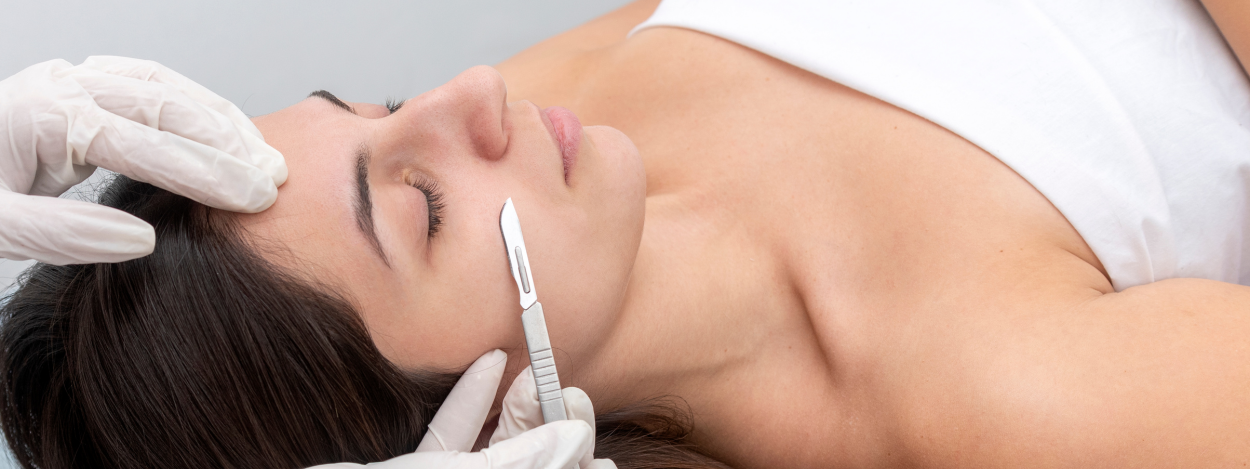
Dermaplaning is one of the easiest treatments to underestimate. People often hear that it removes dead skin and peach fuzz, then assume it is little more than a polished version of shaving. That is not really the right way to look at it. A good dermaplaning appointment is a controlled exfoliation treatment chosen for very specific reasons. It is booked when someone wants a smoother surface, a cleaner makeup finish, a brighter look, and a treatment that fits easily into a normal week.
That is also why clients often love it. The payoff is easy to see and easy to feel. Skin usually feels softer right away. Makeup can sit more evenly. Product application can feel smoother. The overall finish tends to look cleaner and more refined. When the timing is right, it is one of the most practical treatments for maintenance, event prep, or a reset between stronger treatments.
At Clear Skin Medi Spa, we do not treat dermaplaning like the answer to every skin concern. It is a strong option for surface refinement. It is not a replacement for treatments built for deeper scarring, stronger pigment correction, or bigger collagen goals. The best results come when the treatment is chosen for what it actually does well instead of what people assume it does.
This guide is here to help you understand where dermaplaning fits. We will walk through what changes after treatment, who usually benefits most, when timing matters, how it compares with other exfoliating services, what aftercare looks like, and when another treatment may suit the goal better.
Dermaplaning works on the surface, and that is exactly why it is useful
Dermaplaning is a form of superficial exfoliation. Cleveland Clinic describes dermaplaning, sometimes called dermablading, as a treatment that removes dead skin and facial hair from the surface. That is important because it explains both the strengths and the limits of the service.
The treatment is not trying to remodel the deeper layers of the skin. It is not trying to create the kind of healing response associated with microneedling. It is not trying to create a peel-type resurfacing plan. It is working at the level where surface buildup and fine vellus hair can change how the skin looks and feels day to day.
That makes it especially useful when the concern is:
- a rough or uneven-feeling surface
- dullness from superficial buildup
- makeup sitting poorly
- product application not feeling as smooth as it should
- peach fuzz catching light or texture on the face
The reason people respond so well to it is that those concerns are very visible. They may not sound dramatic, but they affect how the skin looks every morning. A smoother surface can change the way the whole face presents, especially for people who wear makeup regularly or have an event coming up.
This also explains why dermaplaning often feels immediately satisfying. It is addressing a visible surface concern directly. When the right client books it at the right time, the result feels polished very quickly.
The main benefits people notice after dermaplaning
People usually do not need long explanations to understand the appeal once they have had the treatment once. The skin often feels different right away, and that immediate difference is a big reason the service stays popular.
At Clear Skin Medi Spa, the benefits we highlight on the service page are:
- removal of dead skin cells and facial peach fuzz
- smoother-feeling skin
- a brighter-looking finish
- better product absorption
- compatibility with many skin types, including sensitive skin
In practical terms, clients often notice benefits in 4 main ways.
1. The surface feels smoother
This is usually the first thing people notice. The skin feels softer to the touch because superficial buildup and vellus hair have been removed from the surface.
2. Makeup sits more evenly
This is one of the biggest reasons dermaplaning remains popular before events and photo-heavy moments. A smoother surface often gives foundation, concealer, and powder a cleaner base to sit on.
3. The face looks more polished
This is not because dermaplaning changes the deep structure of the skin. It is because the surface looks cleaner, brighter, and less burdened by buildup.
4. Skin care can feel like it applies more evenly
Clients often describe serums and moisturizers as gliding on more smoothly after treatment. That does not mean every product suddenly works better in a dramatic way, but the surface often feels more receptive and less rough.
These benefits matter because they match everyday concerns. Clients are not always looking for a major medical-aesthetic plan. Sometimes they want skin that feels cleaner, looks brighter, and photographs better without needing a recovery-heavy appointment. Dermaplaning fits that goal very well.
Dermaplaning is usually best for clients who want polish, not deep correction
One of the cleanest ways to decide if dermaplaning makes sense is to look at what problem you are really trying to solve.
Dermaplaning is usually a strong fit when:
- you want a low-downtime refresh
- your skin feels dull from surface buildup
- peach fuzz is affecting how makeup sits
- you want a smoother finish before an event
- you want a treatment that can fit into regular maintenance
It becomes a weaker fit when the main concern is:
- deeper acne scarring
- more stubborn pigmentation
- a need for stronger resurfacing
- inflamed acne in the treatment area
- a compromised or irritated skin barrier
This is a really important distinction. Some treatments are exciting because they sound more advanced. Dermaplaning usually does not need that kind of language. Its value is in how practical it is. It gives people a more polished surface without dragging them into a bigger recovery plan than they wanted.
The clients who tend to love it most are often the ones who:
- like a visible result right away
- want a cleaner base for makeup
- prefer treatments with simple aftercare
- are building a maintenance rhythm
That profile helps explain why it stays so popular. It solves a very real problem without asking the client to rearrange their whole week.
It is not the same thing as shaving
This is one of the most common questions we hear, and it is worth answering directly. No, dermaplaning is not the same as shaving.
Yes, both remove hair at the surface. That is where the similarity ends.
Dermaplaning is a controlled professional exfoliation treatment. On our service page, we explain that a sterile surgical blade is used at a specific angle to remove both dead skin and vellus hair. That matters because the treatment is not only about taking hair off the face. It is about skin surface refinement.
Shaving at home is generally focused on hair removal alone. Dermaplaning is booked because the client wants:
- exfoliation
- smoother skin
- a cleaner-looking surface
- better makeup application
- a more polished overall finish
The hair-growth fear is another part of this conversation. Our FAQ says clearly that hair grows back in the same color and thickness it had before. That is consistent with what clients need to hear most. Dermaplaning does not turn fine facial hair into coarse hair. The regrowth can feel a little different at the blunt edge, but the follicle itself is not being transformed into something new.
So if you have been avoiding dermaplaning because you think it will make facial hair darker or thicker, that fear should not be the reason you rule it out.
Timing matters more than many clients expect
Dermaplaning is easy to fit into a routine, but that does not mean timing is irrelevant. A treatment can be low-downtime and still have better and worse places in your calendar.
Clients often book dermaplaning before:
- weddings
- parties
- travel
- photos
- brand shoots
- work events
- special dinners
That makes sense because the finish is usually quick and polished. Still, timing matters because the skin should be calm going into the treatment, and it should not be stacked on top of too many other strong steps all at once.
The treatment may be a poor fit that week if:
- you over-exfoliated recently
- your barrier feels irritated
- you have active inflamed breakouts
- you recently had another stronger resurfacing service
- you are planning to do too many treatments right before the same event
This is one reason we often tell clients that dermaplaning works best when it is part of a plan instead of a rushed last-minute add-on. A treatment can be easy and still deserve thoughtful timing.
If you want the best chance of liking the result, do not wait until the skin is already reactive and then try to force a surface treatment to save the week. Use the service when the skin is calm enough to benefit from it.
Dermaplaning before an event can work beautifully when the skin is calm
Event prep is one of the strongest reasons to book dermaplaning. A smoother surface, softer finish, and cleaner makeup application are all things clients notice quickly, which makes the service feel rewarding before a visible occasion.
This is why it works well for:
- bridal events
- engagement shoots
- family photos
- graduation
- birthday celebrations
- vacations
- public-facing work events
The strongest event-prep benefit is not that dermaplaning is dramatic. It is that it is efficient. It gives a visible surface upgrade without making most clients manage a heavy recovery phase.
Still, event prep should not turn into over-treatment. If someone is booking dermaplaning, a peel, a laser treatment, and a new home routine all in the same short window, the skin can end up more reactive than polished.
A good event plan usually looks simpler than people expect:
- calm the skin
- choose the right treatment
- leave enough room for it to settle
- avoid stacking too much exfoliation
That principle matters more than the treatment name.
Dermaplaning and sensitive skin
Clients with sensitive skin often ask about dermaplaning because they want visible improvement without the sting or downtime that can come with more aggressive resurfacing. Our service page notes that dermaplaning can work for many skin types, including sensitive skin, and that is one reason people keep coming back to it.
Still, sensitive skin does not mean automatic yes. It means the skin needs to be looked at honestly that day.
Dermaplaning can be a good fit for sensitive clients when:
- the skin is calm
- the barrier is stable
- there is no active irritation
- the goal is surface refinement, not stronger correction
It may be a poor fit in the moment if:
- the skin is inflamed
- there is active acne or broken skin
- a strong product reaction happened recently
- the client has been over-exfoliating
This is why the skin condition on treatment day matters more than the label sensitive skin on its own. A sensitive client with calm skin may do very well. A more resilient client with an irritated barrier may need to wait.
In clinic, that is exactly why we assess before we treat. The treatment should serve the skin you have that day, not the plan you made in your calendar a week ago.
When another treatment may make more sense than dermaplaning
People often group dermaplaning together with other services that make the skin look fresher, but the overlap can be misleading. Similar-looking treatments often solve different problems.
Dermaplaning may not be the best next step if the main goal is:
- stronger resurfacing
- extraction-focused cleansing
- congestion management
- deeper texture correction
- acne-scar improvement
In those cases, another treatment may fit better.
If the goal is hydration and extraction
Hydrafacial may make more sense when the client wants cleansing, extraction, hydration, and a more fluid-based treatment flow.
If the goal is a stronger resurfacing plan
Advanced Facial Peel may fit better when the concern is uneven tone, pigment, or a need for more intentional resurfacing.
If the goal is a more mechanical texture reset
Microdermabrasion may fit better when the client wants a different type of exfoliating treatment and the concern is more about surface renewal than peach fuzz or makeup finish.
If the goal is general maintenance and calming care
Facials may be enough when the client wants upkeep, relaxation, and skin support without a more targeted exfoliation focus.
That does not make dermaplaning weaker. It means it has a clear lane, and it works best when it stays in that lane.
A practical comparison helps more than trend language
Clients do better when the service is matched to the goal instead of to a trend. Here is the simpler comparison:
| If your main goal is... | Dermaplaning may fit well | Another service may fit better |
|---|---|---|
| Smoother makeup application | Yes | Sometimes |
| Removing superficial facial hair | Yes | No |
| Low-downtime polish before an event | Yes | Sometimes |
| Extraction plus hydration | Limited | Hydrafacial |
| Stronger resurfacing | Limited | Advanced Facial Peel |
| Deeper texture reset | Limited | Microdermabrasion or peel planning |
| Acne-scar support | Limited | Microneedling or another corrective plan |
This kind of comparison is more useful than simply asking which treatment is best. The best one is the one that matches the problem you are actually trying to solve.
Aftercare is simple, but it still matters
Dermaplaning does not usually come with heavy aftercare, but that does not mean aftercare can be ignored. Our service page advises clients to avoid direct sun exposure and extreme heat for the first few days, skip scrubs and aggressive exfoliators for about a week, and focus on hydration, serums, moisturizer, and sunscreen.
That is a good summary because it captures the real goal: keep the skin calm and protected.
The first few days after dermaplaning usually go best when you:
- keep the skin hydrated
- avoid aggressive exfoliation
- do not overdo actives
- protect the skin from sun
- avoid unnecessary irritation
If the treatment was booked because you wanted a clean, polished finish, then the most important thing you can do afterward is not undo that calm with too much product or friction.
This is also one reason dermaplaning can be a nice treatment for clients who want a visible result but do not want to manage complicated recovery instructions. The care is simple, but it still deserves to be followed.
For some clients, this lighter aftercare is exactly why the treatment stays in rotation. They do not want to think about peeling, flaking, or hiding at home for several days. They want a smoother finish, a calmer plan, and a treatment that lets them go back to life without much drama.
How often dermaplaning usually fits into a routine
Our FAQ notes that dermaplaning is commonly done every 3 to 4 weeks. That makes sense because it fits the rhythm of surface skin renewal and regular maintenance well.
That does not mean every client needs it on that exact schedule. Some clients book it:
- before specific events
- as part of a monthly treatment rhythm
- before another planned service
- during periods when their makeup-heavy schedule makes a smoother surface feel especially useful
The right rhythm depends on the role you want the treatment to play. If it is event prep, timing matters more than frequency. If it is maintenance, consistency matters more than intensity.
Dermaplaning usually works best as something you place into a routine with intention, not as a service you rush into only when the skin already feels off.
Pairing dermaplaning with other treatments can work well when the order makes sense
One reason dermaplaning stays useful in clinic is that it can fit into a broader treatment plan without competing with everything else. Our FAQ already notes that dermaplaning can be paired with a chemical peel in the right plan. That pairing is worth talking about because it shows how the treatment can support other services when it is timed properly.
Clients may pair dermaplaning with another service when they want:
- a smoother surface before a facial-focused event plan
- better product contact after surface buildup is removed
- a more polished finish as part of a larger skin-renewal rhythm
The key point is that pairing should be thoughtful. Stacking too many exfoliating steps too close together can leave the skin more reactive than refined. Good pairing asks 3 simple questions:
- Is the skin calm enough for both steps?
- Do the two services solve different parts of the same goal?
- Does the timing allow the skin to settle properly?
When those answers line up, dermaplaning can support a broader plan very well. When they do not, the better answer is often to simplify the week instead of adding more.
The biggest dermaplaning mistake is booking it for the wrong problem
Dermaplaning usually disappoints people only when it is chosen for a concern it was never meant to solve. If the real goal is acne-scar correction, deeper resurfacing, or a major pigment plan, the service can still leave the skin feeling smoother, but it may not create the level of change the client expected.
That is why the treatment works best when the question is:
- How can I make the surface look smoother and more polished?
It works less well when the question is:
- How can I solve every texture or pigment issue on my face in one low-downtime appointment?
This is also where comparison shopping can mislead people. If you are reading about dermaplaning, peels, Hydrafacial, and microdermabrasion as if they are the same treatment with different brand names, it becomes much easier to book the wrong thing. The right move is not to pick the trendiest option. The right move is to match the treatment to the concern.
Common questions we hear before dermaplaning
Will hair grow back darker or thicker?
No. Dermaplaning removes vellus hair at the surface. It does not change the follicle itself. Hair grows back the same color and thickness it had before.
Is dermaplaning painful?
Our current FAQ says it is completely painless, and that matches how most clients describe it. It is usually gentle and easy to tolerate.
Can dermaplaning help with blackheads?
Our service FAQ says it can help with congestion-related concerns like blackheads and whiteheads, especially when surface buildup is part of the picture. If blackheads are the main concern, we still look at the overall skin plan before deciding if dermaplaning is the best first step.
Is dermaplaning the same as shaving?
No. Shaving removes surface hair. Dermaplaning is a controlled exfoliation treatment that also removes dead skin at the same time.
How long does the appointment take?
Our FAQ notes that it usually takes around 30 minutes and does not require downtime. That short timing is one reason the treatment fits so easily into busy schedules.
Can I combine dermaplaning with another treatment?
Sometimes yes. Our FAQ specifically notes that dermaplaning can be paired with a chemical peel in the right plan. The important part is that the pairing should be intentional, not simply more exfoliation for the sake of it.
Can very fair skin still be treated?
Yes. Our FAQ says dermaplaning is suitable for all skin tones, including very fair skin. We still assess the current condition of the skin before treatment.
Should I book dermaplaning if I have active acne?
Not automatically. If the skin is inflamed or broken out in the treatment area, another approach may be safer and more useful.
How we approach dermaplaning at Clear Skin Medi Spa
At Clear Skin Medi Spa, dermaplaning is not treated like a throwaway add-on. It is a useful service when the goal is smoother skin, a cleaner finish, and a treatment that fits into real life without much disruption. We use it when the concern is surface-level refinement, not when the skin clearly needs a different category of treatment.
That is why we pay attention to timing, skin condition, and the bigger plan around it. If the skin is calm and the goal fits, dermaplaning can be one of the easiest appointments to love. If the skin is irritated or the client really needs deeper correction, another recommendation may serve them better.
If you want smoother skin, a brighter look, and a treatment that makes makeup sit more cleanly, you can book dermaplaning now or visit our Dermaplaning page to see how we approach the service at the clinic.