
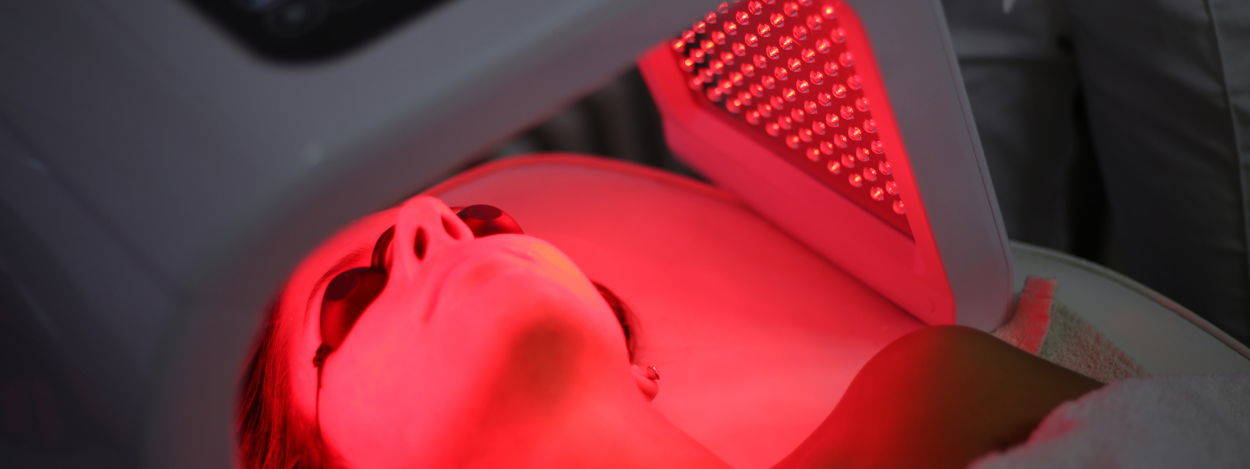
LED Light Therapy is one of the services people misunderstand in 2 opposite ways. Some assume it is too gentle to matter. Others assume it can quietly fix every skin concern without the client needing any larger plan. Neither view is helpful.
The truth sits in the middle. LED light therapy can be a very useful part of skin care when it is booked for the right reason. It tends to work best when the client understands what it is supposed to do, what it is not supposed to do, and how it fits beside other treatments instead of pretending to replace them all.
At Clear Skin Medi Spa, that is exactly how we use it. Sometimes it is the main appointment because the client wants a low-drama, low-downtime support service. Sometimes it sits between stronger appointments. Sometimes it helps support acne-focused care. Sometimes it helps calm the skin after another service. In every case, the value comes from fitting it into the right treatment role.
This guide is here to explain that role clearly so you can decide if LED light therapy makes sense for your skin, your routine, and the stage of treatment planning you are in right now.
LED light therapy usually works best when the client wants support, not force
The easiest way to think about LED light therapy is to stop treating it like a dramatic corrective service. It is usually more useful as a support tool.
That makes it attractive for clients who want:
- a gentle recurring appointment
- support for acne-prone skin
- a calmer maintenance service
- help between more active treatments
- a low-downtime option that still feels purposeful
This is why LED often earns a place in treatment plans even though it does not look as dramatic as stronger services on a menu. It asks less from the skin in the moment, which makes it easier for many clients to repeat consistently.
Consistency matters here. A treatment that is easy to stay on top of can have more real-life value than a treatment a client books once, finds stressful, and never returns to.
Clients usually feel better about LED once they stop expecting a dramatic one-day result
One of the biggest reasons people dismiss LED too quickly is that they judge it by the wrong standard. They book a single session, wait for a dramatic visible shift, and then decide the treatment must be too weak to matter.
That is not usually the fairest way to judge it.
LED often makes more sense when the client values:
- steady support
- low disruption
- repeatability
- a treatment that fits around the rest of life
That does not make the service small. It makes the service easier to use well. Many skin treatments sound exciting because they promise a bigger moment. LED often earns trust in a quieter way. It becomes useful because it can stay in the plan without exhausting the client or overloading the skin.
This is one reason we do not sell it like a shortcut. It is not a shortcut. It is often a low-drama support treatment that becomes more valuable when the client is willing to be consistent.
Clients often like LED because it fits into life without much disruption
Some treatments ask for recovery time, schedule changes, and more emotional commitment. LED light therapy usually sits differently.
Clients often like that it can feel:
- calm
- low stress
- easy to repeat
- simple to schedule
- easier to pair with the rest of life
That does not make it trivial. It makes it usable.
This is especially helpful for clients who want a treatment plan that does not rely on every appointment feeling intense. Some people want skin support they can keep up with regularly. They do not want every visit to feel like a major correction day. LED can suit that mindset well.
At-home LED and in-clinic LED are not the same conversation
Clients often ask if the at-home mask they saw online is basically the same as an in-clinic LED appointment. The safest answer is no.
AAD guidance on red light therapy notes that dermatologists usually recommend red light as a complementary therapy and that in-office treatment is more powerful than the at-home versions most people buy. AAD acne guidance also notes that FDA-cleared at-home visible light devices are less powerful than the devices used in a dermatologist's office.
That does not mean at-home devices are meaningless. It means clients should not assume an at-home purchase and a professional treatment are interchangeable.
The more useful way to think about it is this:
- at-home devices may suit clients who are consistent and realistic
- in-clinic treatment tends to be stronger and more directed
- neither one should be treated like a magic answer on its own
This matters because clients often get frustrated when they compare a home device to a professional treatment standard without realizing the difference in intensity and supervision.
LED is often strongest when it supports a larger plan
One of the most useful ways to think about LED is as a treatment that often becomes stronger through context.
For example, it may fit well:
- between acne-support appointments
- around facial maintenance
- after a more active treatment, if timing and skin condition make sense
- during periods when the client wants a calmer visit but still wants to stay on track
This is an important point because clients sometimes ask if LED works, when the better question is where LED works best.
If the client is already in a plan that includes microneedling, an advanced facial peel, or regular facials, LED may have a very specific role as support. If the client expects LED to replace everything else at once, disappointment becomes more likely.
Acne support is one of the most common reasons people book it
Many clients first hear about LED light therapy through acne conversations. That makes sense. It is one of the categories where the treatment often gets brought up early.
What matters here is keeping expectations clean. LED can be part of acne support. That does not automatically mean it replaces:
- acne-focused home care
- prescription treatment when needed
- extraction-based care
- a larger acne plan
The clients who do best with LED for acne support are usually the ones who understand it as one part of the picture. It may help support the skin in a gentler format, but it is not always the only thing the skin needs.
This distinction matters because acne can range from mild and occasional to more persistent and inflammatory. Those are not the same booking situation. LED may fit beautifully for one and only partially for another.
Acne expectations need to stay specific, not vague
This is where a lot of misunderstanding happens. Acne is not one single skin concern. A few recurring pimples, more inflamed breakouts, congestion with blackheads and whiteheads, and deeper cystic acne are all different problems.
AAD acne guidance notes that visible light devices can treat pimples, but that visible light is not effective for blackheads, whiteheads, cysts, or nodules. That is one of the most important expectation-setting points in the whole LED conversation.
It means LED may be helpful in an acne plan, but the exact kind of acne matters. A client dealing with more persistent or more inflamed acne may still need:
- prescription care
- extraction support
- a larger acne strategy
- a different in-clinic treatment path
Clients usually feel much better when that nuance is explained before they book. It protects the value of the treatment and keeps the decision honest.
LED can also be appealing when the skin needs calm more than intensity
Not every client is trying to correct something aggressively. Some want the skin to feel steadier. Some want a treatment that supports recovery. Some want a maintenance appointment that feels active enough to be worth booking without pushing the skin too hard.
That is where LED can become very appealing. Clients who are wary of heavy downtime, heavy exfoliation, or more aggressive treatment pacing often like the role it can play.
This does not mean it is the answer to every concern. It means it can serve a client well when the skin needs support instead of challenge.
This is especially useful for people who:
- are consistent with skin appointments
- want a recurring service they can tolerate well
- want to avoid overloading reactive skin
- are already doing other treatments and want a calmer support option between them
What LED does not replace
This part is what keeps the whole conversation honest. LED light therapy can be useful, but it does not replace every other treatment lane.
It does not automatically replace:
- extractions
- resurfacing
- stronger corrective work
- a texture-focused treatment plan
- prescription acne care when that is what the skin truly needs
If the main concern is deeper scarring, stronger resurfacing, or more visible textural correction, then the real answer may still live with microneedling or an advanced facial peel. In that case, LED may support the plan without being the whole plan.
Clients do better when this is said plainly. It protects the value of LED by not asking it to perform a job that belongs to another category.
One of the smartest uses of LED is between stronger appointments
Many treatment plans become more sustainable when not every appointment asks the skin to do something major.
That is one reason LED often fits well between stronger services. A client may still need a more active treatment for their main concern, but that does not mean every visit has to carry the same intensity. A support appointment can help keep the client connected to the plan without making the skin feel overworked.
This is where LED can be practical in a way clients really appreciate. It helps maintain momentum.
For some people, that means:
- they stay more consistent with appointments
- the overall plan feels easier to tolerate
- they do not feel like every booking has to be a big decision
This kind of consistency often matters more than people expect. Skin care works better when the client can actually stay with the plan.
Maintenance value is one of the biggest reasons LED stays in some routines
Some clients do not need every appointment to chase a dramatic change. They need a treatment rhythm that helps the skin stay supported between bigger decisions.
That is where LED often earns its place. It can feel useful for clients who want:
- a regular check-in with their skin
- support between stronger services
- a treatment that does not interrupt work or social plans
- a service that feels active without feeling punishing
The word maintenance can sound less exciting than correction, but it matters. A lot of skin routines improve because the client keeps showing up for the pieces they can realistically maintain.
Standalone LED appointments can still make sense
Not every LED booking has to be part of a heavy correction schedule. Some clients simply want a low-drama service that still feels useful.
A standalone LED visit may make sense when the client wants:
- a calmer treatment day
- support for acne-prone skin
- maintenance without heavier downtime
- a service that feels gentle enough to repeat
This matters because some people avoid treatment planning entirely when every option sounds too intense. LED can sometimes become the service that helps them start somewhere.
That kind of entry point has real value. A client does not always need the biggest treatment first. Sometimes they need the one they can comfortably commit to.
Timing still matters, even with a gentle treatment
Clients often assume a low-downtime treatment can be booked any time with no planning. Timing still matters. A treatment may be gentle and still fit better in some parts of the calendar than others.
For example, it helps to think about LED differently if:
- you are in the middle of another treatment plan
- your skin is currently irritated
- you are booking close to an event
- you are trying to calm the skin after a recent service
This does not mean LED becomes difficult. It means the role of the appointment should stay specific. A maintenance visit is different from a support visit. A support visit after a stronger treatment is different from a first-time acne-support booking. Timing helps define what the session is meant to accomplish.
Recovery support is another place where LED can fit well
Clients often ask if LED is helpful after stronger treatments. In many cases, that is one of the strongest support roles it can play, provided the timing and skin condition make sense for the larger plan.
This is not something to improvise casually on your own. The exact timing should always fit what was done before and how the skin is responding. Still, the reason the question comes up so often is easy to understand. Clients want something that helps the skin feel supported without piling more stress onto it.
That is exactly the kind of role LED can serve well when used thoughtfully.
Clients with reactive skin often appreciate that LED can stay on the gentler side
Sensitive or reactive skin does not mean every treatment is off limits. It does mean the client may need a calmer approach overall.
This is one reason LED can appeal to reactive-skin clients. It may offer a treatment format that feels more manageable than stronger resurfacing or more intensive appointments.
That does not mean reactive skin should book LED automatically without discussion. It means the service often belongs in the conversation when the client wants something lower-drama and repeatable.
This is especially helpful when the client has been avoiding everything because the menu sounds too intense. Sometimes the best treatment relationship starts with a service the skin can tolerate well.
LED does not have to compete with facials to be useful
Some clients compare LED with a facial as if one has to replace the other. In practice, they often do different jobs.
A facial may be the better choice when cleansing, products, masks, extraction support, or a more hands-on treatment rhythm are central to the goal. LED may be the better choice when the client wants a calmer support session that can sit beside the facial plan rather than compete with it.
For some clients, the best plan includes both at different times. Once you stop treating the treatments as rivals, the planning conversation becomes much easier.
LED light therapy can fit better than stronger treatments during busy weeks
Many clients do not make booking decisions by skin goals alone. They also look at work, school, travel, family plans, and how much visible recovery they can handle. That is one of the reasons LED keeps a place on treatment menus. It often suits weeks where the client still wants to care for the skin but does not want to take on a more demanding appointment.
The American Academy of Dermatology notes that visible light devices used for acne can cause mild stinging or burning for some patients, and that these effects usually settle within a few hours or by the next day. That kind of time frame is one reason some clients treat LED as a practical support visit. The appointment can still feel useful without turning the next few days into a guessing game.
This does not mean LED should be sold as an event fix. It means the service can fit neatly into a crowded calendar when the goal is support, steadiness, and low downtime.
Clients often like LED in seasons when they:
- have no room for peeling or flaking
- want to stay on track between stronger appointments
- need a calmer visit before a busy public-facing week
- want a treatment they can repeat without making every booking feel heavy
The easier a service is to keep in rotation, the more likely it is to stay part of a real routine.
LED light therapy is often the wrong first step for deeper corrective goals
Part of honest treatment planning is saying when a service should not be doing the whole job. LED can be very useful, but it can still be the wrong first booking if the main concern points toward a stronger lane.
That is often true if the skin concern is centered on:
- deeper textural change
- acne scarring
- clogged pores that need extraction support
- stronger pigment work
- more inflamed breakouts that need a larger acne plan
In those cases, a client may still benefit from LED later. It may calm the skin, support the routine, or make a larger plan easier to maintain. That is different from calling it the main answer on day 1.
The American Academy of Dermatology's acne guidance is helpful here because it separates pimples from blackheads, whiteheads, cysts, and nodules instead of treating acne like one single problem. That same thinking helps in clinic. Once the concern is named properly, the treatment plan usually improves.
This is why we sometimes guide clients toward microneedling, an advanced facial peel, or a facial plan before we talk about keeping LED in the schedule. The right fit is not always the gentlest option. It is the option that matches the main concern most honestly.
Timing and expectations matter as much as the service itself
Clients sometimes book LED hoping for a dramatic change from a single visit and then judge the treatment too harshly when it behaves more like a support service. That is usually an expectation issue, not a treatment failure.
LED often makes the most sense when the client expects:
- support
- steadiness
- repeatability
- low disruption
The client who wants immediate dramatic correction may need a different lane. The client who wants a lower-stress service that can be repeated regularly may feel much happier.
This is why consultation matters. The same service can feel underwhelming or exactly right depending on what the client thought they were booking.
Home care still shapes how useful LED feels over time
LED can support a plan, but it cannot carry the whole routine on its own. If the client is constantly changing products, skipping the basics, over-exfoliating, or ignoring a bigger issue that needs more targeted care, the appointment may feel less useful than it should.
That does not mean the home routine has to be complicated. It means it has to make sense. When the home routine and the treatment plan are moving in the same direction, clients tend to understand the value of LED much more quickly.
Questions clients ask before booking LED light therapy
Is LED light therapy safe?
It is generally considered a low-risk treatment when used appropriately, but safe care still depends on the equipment, the reason it is being used, eye protection, and provider guidance.
Does one session make a difference?
One session can feel supportive or calming, but LED often rewards consistency more than one-off expectations.
Can LED replace acne treatment?
Not always. If acne is more persistent or more inflamed, you may still need prescription care or a larger acne plan. LED may support that plan without replacing it.
Is LED good after a stronger treatment?
In some situations, yes, which is one reason it often fits well as a support service. The exact timing should match the larger treatment plan and the condition of the skin.
Is LED only for acne?
No. Acne is one common reason to book it, but clients also use it as a calming, supportive, or maintenance service depending on the plan.
Why do people keep booking it if it is gentle?
Because gentle and useful are not opposites. Many clients value treatments they can repeat without turning every appointment into a recovery project.
How we guide clients at Clear Skin Medi Spa
At Clear Skin Medi Spa, we like LED light therapy most when it is booked with a specific role in mind. It can work well as a calm standalone visit, as acne-supportive care, as maintenance, or as support around a larger treatment plan. It usually works best when the client sees it as a useful part of the plan, not a replacement for every other treatment lane.
If your main concern points elsewhere, we say that too. We may guide you toward microneedling, an advanced facial peel, or another service if those fit the job better.
That is the real strength of good treatment planning. Every service gets used for what it actually does well.
If LED light therapy sounds like the right fit for your current routine, you can book LED light therapy now or read more on our LED Light Therapy page.